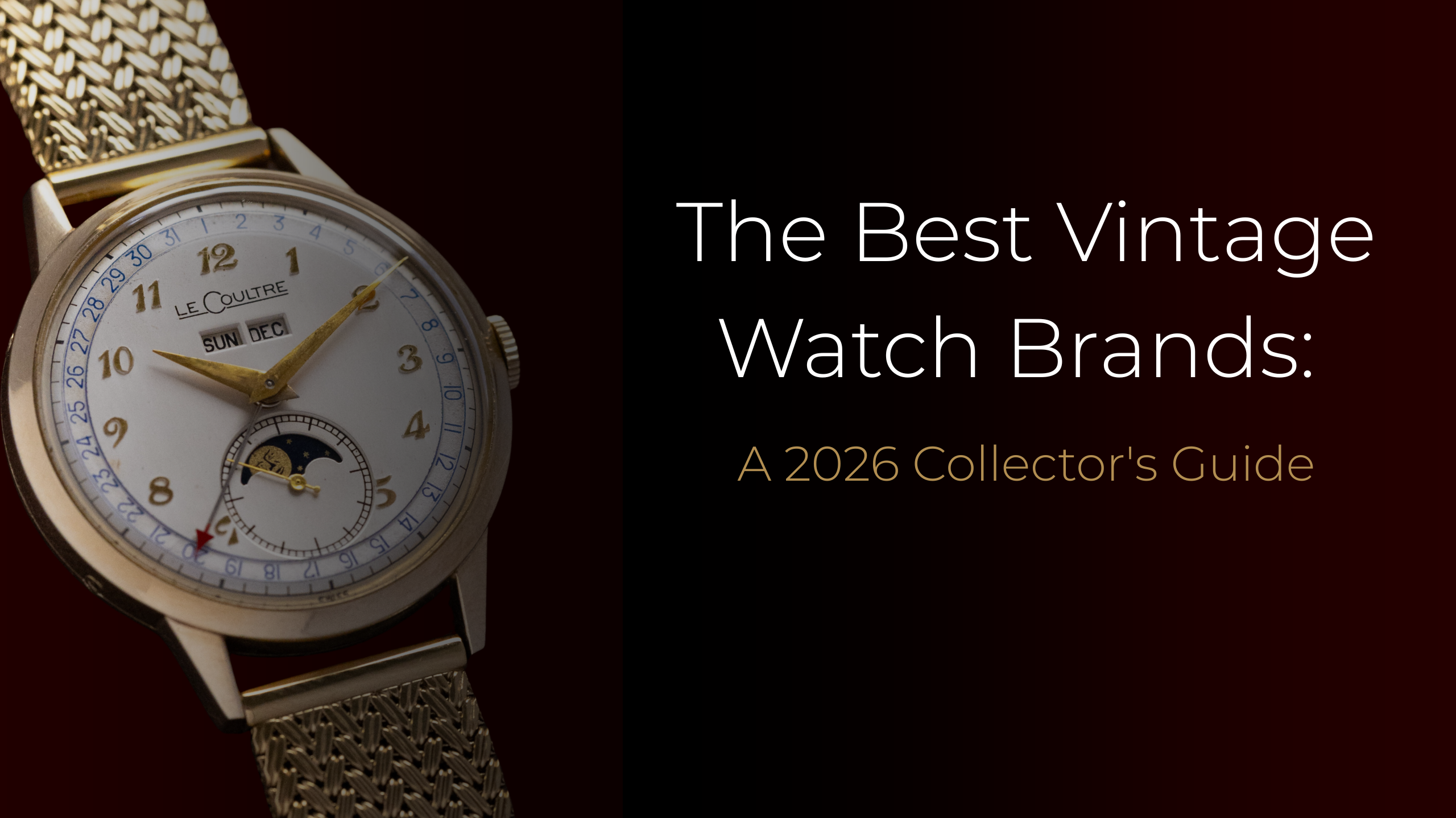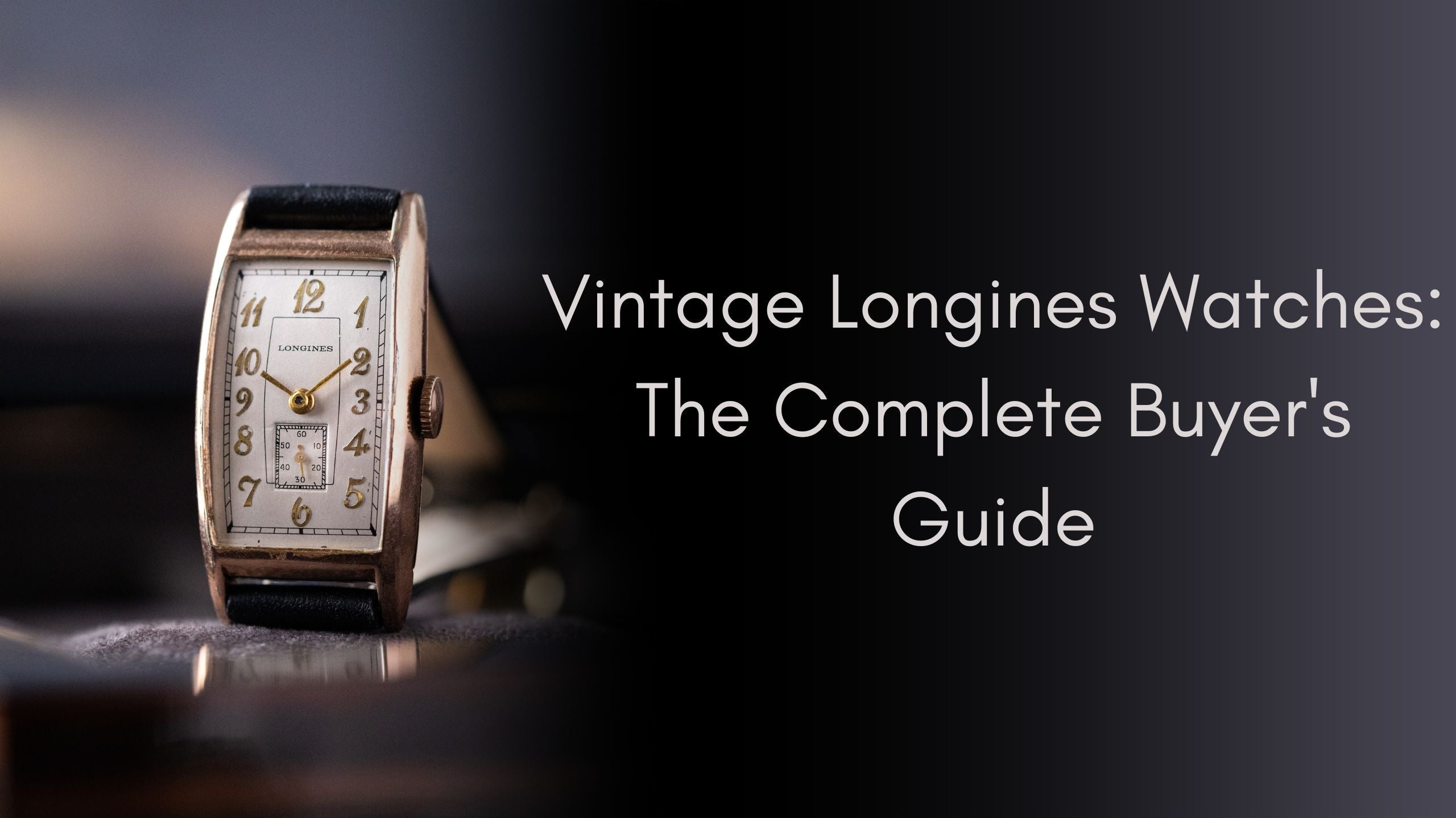

If you've ever come across a vintage watch signed "LeCoultre" and wondered whether it's a lesser version of Jaeger-LeCoultre — it isn't. It's the same watch, from the same Swiss factory, with the same movement inside. The different name on the dial comes down to one thing: US import taxes. Here's the full story.
This article sets the record straight. LeCoultre and Jaeger-LeCoultre are the same manufacture, the same address in Le Sentier, Switzerland, the same movements, the same finishing standards. The difference on the dial is a customs solution, not a quality designation — and understanding that distinction opens one of the most compelling value opportunities in the vintage watch market.
Who Is Jaeger-LeCoultre?
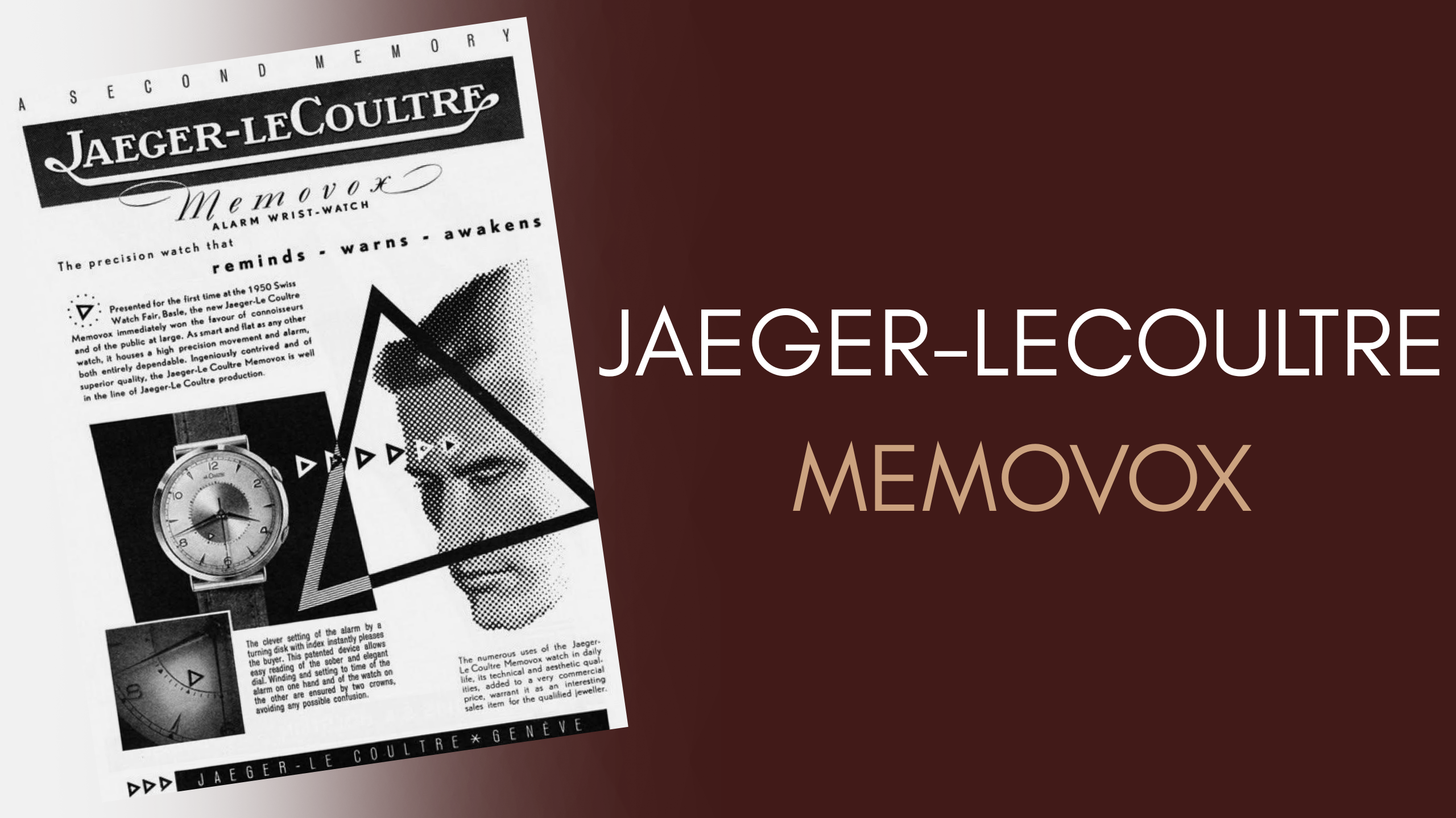
Jaeger-LeCoultre was founded in 1833 in the Vallée de Joux — the Swiss watchmaking heartland in the Jura mountains — by Charles-Antoine LeCoultre. The LeCoultre manufacture quickly established itself as a movement maker of the highest order, supplying calibres to other prestigious maisons while building its own watches and clocks. Its contributions to horology are foundational: the Calibre 101, first shown at the 1939 New York World’s Fair, remains the smallest mechanical movement ever made. Between 1870 and 1910, LeCoultre supplied the majority of ébauche movements to Patek Philippe. By the turn of the 20th century, the catalogue had grown to more than 350 calibres. The full story of how Jaeger-LeCoultre became Swiss watchmaking’s most important movement supplier is documented in our guide to JLC’s movement supply relationships.
The full “Jaeger-LeCoultre” name did not arrive until 1937, when the manufacture merged with Parisian watchmaker Edmond Jaeger. The hyphenated identity fused LeCoultre’s manufacturing genius with Jaeger’s design-forward Parisian sensibility. From 1937 onward, one single manufacture operated at one single address in Le Sentier. This is the essential fact from which everything else flows. There was never a separate “LeCoultre” company making cheaper watches.
One manufacture. One address. Two names on the dial — and four decades of confusion in the American market that followed.
The Import Tax Hack That Created the LeCoultre Name
US Watch Import Tariffs — The Mechanism
The story of “LeCoultre” as a distinct dial name is, at its core, a story about import tariffs. The United States maintained strict watch import regulations during the mid-twentieth century, designed to protect the domestic American watch industry from Swiss competition. These tariffs were levied on a granular basis: the rate varied depending on jewel count, whether a movement had been adjusted, and — crucially — whether a complete, cased watch was being imported or merely movement components. A complete, cased watch attracted higher duties than a movement, dial, and hands shipped alone.
Jaeger-LeCoultre’s solution was elegant. Rather than absorbing the higher tariff on finished watches, the manufacture began shipping movements, dials, and hands into the United States without cases. Once the components crossed the border, they were fitted into cases manufactured locally by American case companies. The result was a watch that was neither entirely Swiss nor entirely American — a hybrid product that reflected its bifurcated origin on the dial. Those dials were stamped “LeCoultre” rather than “Jaeger-LeCoultre” to denote this partially Swiss, partially American-made status.
This practice was in effect from approximately the 1930s through to the mid-1970s. The movement inside was the same Swiss-made calibre. The finishing standards were the same. The difference was the case — and the name on the dial.
The Jewel Count Cap — Why Some Movements Differ
One additional mechanism of the tariff system is worth understanding: the jewel count on movements shipped to the United States was deliberately capped at 17, even where the same calibre in its European version contained more. A movement with more than 17 jewels incurred a higher import duty under the Harmonized Tariff Schedule. The practical result is that a US-market LeCoultre and its European Jaeger-LeCoultre counterpart may differ in jewel count despite sharing an identical base calibre — a fact that has contributed to the false impression of inferior American versions. The movements were not inferior. They were optimised for customs.
US-market Jaeger-LeCoultre and Vacheron & Constantin movements share the same import code stamped on the balance cock: “VXN”. Longines used “LXW”; Wittnauer used “AXA.” The shared VXN code between JLC and Vacheron suggests a connection at the level of the Swiss manufactures themselves, not only the American distribution arm. Finding VXN on a movement confirms US-market provenance.
The Corporate Maze: Vacheron, Longines, Wittnauer & LeCoultre
The distribution chain behind the LeCoultre name in the United States was, by any measure, baroque. The earliest evidence of LeCoultre’s American distribution appears in a 1939 catalogue for the New York World’s Fair, where “LeCoultre” appears with the distributor listed as “Vacheron & Constantin and Allied Watches Inc.” By 1948, advertising material describes the arrangement as “Vacheron & Constantin-LeCoultre, division of Longines-Wittnauer Watch Company.”
The name on the tin was Longines-Wittnauer. The movement inside was Swiss, from Le Sentier.
The relationship extended well beyond mere importation. LeCoultre and Wittnauer watch boxes from the early 1950s, while externally distinct in branding, shared identical inner construction. Service pamphlets from both brands were printed in different colours but carried the same addresses in New York, Geneva, and Montreal. During the mid-1950s, Vacheron & Constantin dropped from visible marketing materials — catalogues referring simply to “LeCoultre, Division of Longines-Wittnauer” — yet the Vacheron name continued to appear engraved on case backs of watches sold under the LeCoultre name. By the early 1960s, the full formulation returned: “Vacheron & Constantin-LeCoultre Watch Inc., Division of Longines-Wittnauer Watch Company.”
What Actually Changed on the Watch
American Cases — Different, Not Inferior
Because movements were imported without cases, the cases fitted to LeCoultre watches were manufactured in the United States by several American case companies. Among the most significant were Schwab & Wuischpard (S&W), the Star Watch Case Company, DiVincenzo & Arienti (D&A), and Lutringer & Kammerer (L&K). American cases of this period differed from European equivalents in consistent ways:
| Feature | US LeCoultre | European JLC |
|---|---|---|
| Case diameter | Typically 33–34mm | Often 35mm+ |
| Gold standard | 14K gold; gold-filled common | 18K gold standard; solid more common |
| Gold-filled proportion | ~20% of examples | ~4% of examples |
| Lug profile | Often thinner, more elongated | Heavier European proportions |
| Jewel count | Capped at 17 for tariff purposes | Full calibre jewel count |
| Crown monogram | “LeC” engraved | “JL” monogram standard |
Gold-Filled Cases — What Collectors Should Know
Gold-filled construction was five times more common in the US market than in Europe. A gold-filled case is not solid gold — it is a base metal core with a layer of gold mechanically bonded to the exterior. For practical wear purposes this is perfectly functional; many gold-filled LeCoultre cases from the 1940s–1960s remain in excellent condition today. Collectors should simply be aware of the material when evaluating condition and pricing. For a complete guide to gold types in vintage watches, see our article on gold, gold-filled, and gold-plated watches.
The American Taste Gap — What the US Market Wanted
The LeCoultre line was not simply a rebranded Jaeger-LeCoultre. It reflected genuine differences in what American consumers wanted from a luxury watch in the 1950s and 1960s. Approximately 47% of LeCoultre watches from this period were cased in solid gold — versus roughly a third of European Jaeger-LeCoultre equivalents. Chronographs were rarely part of the US LeCoultre offering; the American customer of the time was drawn primarily toward dress and dressy-casual timepieces.
The most extreme expression of American taste in the LeCoultre line was the Galaxy — a 1950s time-only watch featuring “mystery hands” driven by two transparent rotating discs. In certain versions, the hour markers and hands were set with floating diamonds. Ostentatious by any European standard, it was made for a market that treated a fine watch as jewellery as much as an instrument. Even the Vacheron & Constantin name appears on some Galaxy case backs — a reminder that the lines between these brands in the American market were, at the point of sale, deliberately blurred.
The American buyer wanted their watch to be seen. The LeCoultre Galaxy — with diamond hands that appeared to float in space — was perhaps the perfect expression of that sensibility.
The Three Names Decoded
- LeCoultre — Jaeger-LeCoultre watches sold in the US market from approximately the 1930s through to the mid-1970s. Assembled in the US using Swiss movements imported without cases. Same manufacture, same movements, same standards — adapted to American import law and local taste. The name on the dial is a customs artefact, not a quality designation.
- Jaeger-LeCoultre — The full name of the Swiss manufacture, in continuous use since 1937 and applied to watches sold in Europe and internationally throughout the LeCoultre period. From the mid-1970s onward, the universal global name including the United States.
- Jaeger (used alone) — A separate matter entirely. Vintage chronographs bearing only the “Jaeger” name were produced primarily for the French market, reflecting the Parisian side of the merged identity. Their story is distinct from the LeCoultre US narrative and falls outside the scope of this article.
The Reference System Rabbit Hole
For collectors attempting to research specific LeCoultre references, the paper trail is dense and inconsistently documented. Where the standard Jaeger-LeCoultre reference system identified watches by a unique combination of calibre and case, the American LeCoultre system worked differently: watches were referenced by case codes rather than by calibre-case combinations. A single case code could accommodate multiple calibres; the same code number was sometimes used by different case manufacturers for different cases entirely.
A surviving Longines-Wittnauer-LeCoultre Case Code Catalogue — a document previously unknown to the broader collector community before surfacing in recent years — offers a partial key. It lists case codes alongside their associated calibres and identifies the case manufacturer for each entry. The codes for LeCoultre, Longines, and Wittnauer cases are listed side by side, using prefix letters “LeC,” “L,” and “W” respectively. Believed to date from around 1969–1970, the document covers only a portion of cases used across the full LeCoultre period — significant gaps remain. The research by Blomman Watch Report represents the most thorough reconstruction of this system in the public domain.
Look for these stamps on the case interior or case back: S&W (Schwab & Wuischpard) — the most common; D&A (DiVincenzo & Arienti) — often used both case code and individual case number; L&K (Lutringer & Kammerer) — used only a case code with no case number. The Star Watch Case Company produced cases without a consistent abbreviation. These stamps confirm American case origin and help authenticate the reference against the known catalogue. For guidance on reading case hallmarks, see our Swiss watch hallmarks guide.
When LeCoultre Became Jaeger-LeCoultre in America
The shift away from the LeCoultre identity in the United States was gradual. Catalogues from 1969 begin to introduce the Jaeger-LeCoultre name to American consumers for the first time — with a remarkable phrasing: the full name was described as the version used “in foreign countries,” inverting the actual history since it was the American market that had been using the truncated name for nearly forty years. A 1973 catalogue shows the transition mid-stream: the cover carries the full Jaeger-LeCoultre name, while dials inside are mixed between both versions. By approximately 1975, the change was complete.
The timing coincides with a relaxation of the US tariff regulations that had originally necessitated the LeCoultre name. As the regulatory environment shifted, the commercial logic of maintaining two separate brand identities evaporated. The LeCoultre name was quietly retired, and the unified global identity that exists today was established.
Is LeCoultre Worse? The Verdict
The answer is unambiguous: no. A watch bearing the LeCoultre name is a Jaeger-LeCoultre watch. The movement was made in Le Sentier, Switzerland, to the same standards as the movement in a European Jaeger-LeCoultre. The differences — jewel count, case material, case size, and the name on the dial — are products of American import law and American market preferences, not of the manufacture’s quality control.
Where a collector might legitimately note differences, they are differences of configuration rather than quality. A 17-jewel US-market calibre and an 18-jewel European version of the same movement were both made in the same factory. A gold-filled LeCoultre case was made by an American case company — but the movement inside that case was Swiss-made and Swiss-finished. The cases themselves vary in quality, and some gold-filled examples show wear more readily than solid-gold equivalents. These are real variations, but they are variations of casing — not of the watch’s essential character, and certainly not of the manufacture’s identity.
The LeCoultre name was a customs solution. It was never a quality designation.
The Collector Opportunity
The misunderstanding of the LeCoultre name has real consequences in the vintage market. Watches bearing only “LeCoultre” on the dial are regularly priced below comparable European Jaeger-LeCoultre examples, and in some cases below the intrinsic value of the movements they contain. For the informed buyer, this represents an opportunity. LeCoultre-signed US-market pieces in 14K gold are frequently excellent value — Swiss movements of genuine quality inside American cases that sell at a discount for a name that most buyers misread. For a complete guide to buying vintage Jaeger-LeCoultre and LeCoultre watches across all references and budgets, see our complete vintage JLC collector’s guide.
All pieces below are professionally serviced, movement-tested, and fully authenticated. Prices include taxes and import duties for USA and EU.

A Jaeger-LeCoultre military watch from the 1940s powered by the respected Cal. P469/c — one of the most admired hand-wound calibres JLC produced for the wartime and immediate post-war period. The original radium dial has aged to a warm, even patina with the characteristic cream tone of 1940s Swiss luminous treatment. Sub-seconds at 6 o’clock, railroad minute track. A piece that demonstrates precisely what the article above describes: even in tool-oriented military contracts, JLC maintained the mechanical refinement that earned them the title of “watchmaker’s watchmaker.” This is a European-market JLC — not a US-market LeCoultre — and the original radium dial is fully intact. For guidance on safe handling of radium dials, see our radium watch safety guide.

A European-market Jaeger-LeCoultre — the counterpart to the LeCoultre US-market pieces discussed in this article. Cal. P478 is one of the most admired manual-wind calibres JLC produced: 17 jewels, exceptional movement finish. Original brushed silver dial with radium lume in beautiful aged condition. The full “Jaeger-LeCoultre” signature on the dial tells you exactly which side of the Atlantic it was made for.

A 1948 Jaeger-LeCoultre with the most distinctive lug design of the post-war era: the teardrop, a tapering sculpted profile that frames the dial with a sculptural elegance no contemporary watch achieves. Oversized case for the period, two-tone dial, Cal. P449 manual-wind. A collector’s piece in the truest sense — a design that could only have come from JLC.
This is precisely the kind of piece the article above describes: a US-market LeCoultre in a 10K gold-filled American case, powered by the Swiss-made Cal. 413 from Le Sentier. The dial carries the “LeCoultre” signature — the American-market customs branding. The movement inside is Jaeger-LeCoultre in every essential sense. Warm cream patina, applied gold Arabic numerals, small seconds at 6. A compelling value proposition for the collector who reads the name correctly.

A 1940s Jaeger-LeCoultre Duo Date Pointer in 14K rose gold-filled case — one of the most desirable complications in mid-century JLC collecting. The pointer date sweeps a red hand around the outer chapter ring rather than using a conventional date window: an elegant, immediately legible solution that requires the Cal. 412’s refined architecture to achieve. Salmon-tone railroad dial, original box. This is precisely the calibre of piece that the LeCoultre US-market arrangement was servicing on the other side of the Atlantic — at identical movement quality, different case provenance.
Frequently Asked Questions
LeCoultre vs Jaeger-LeCoultre — FAQ