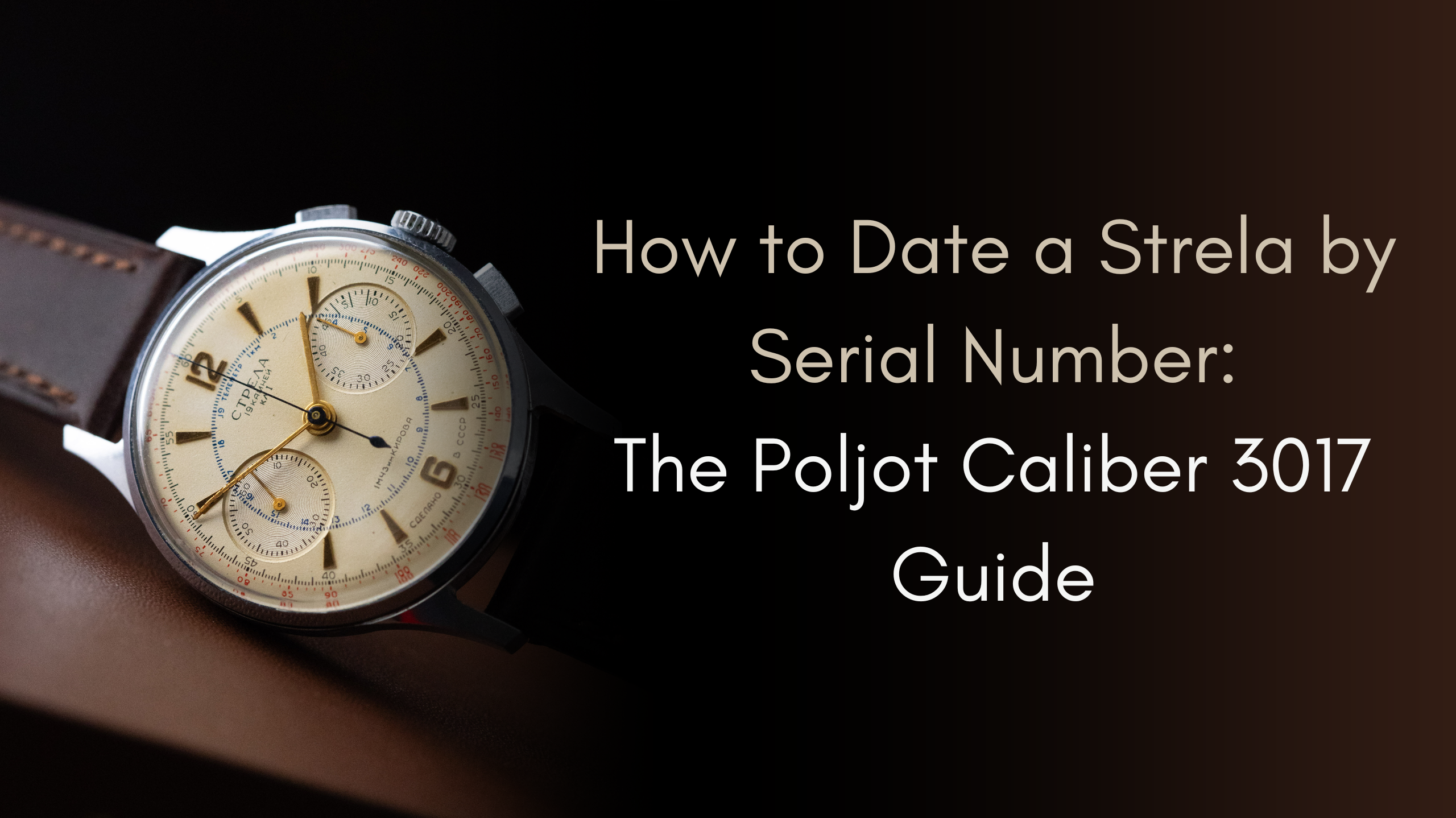

Vintage chronographs are more than elegant mechanical watches. They are functional instruments designed to measure speed, distance, and elapsed time with remarkable precision—long before digital devices existed. Understanding how to use vintage chronograph tachymeter and telemeter scales allows owners and collectors to fully appreciate the purpose and ingenuity behind these historic timepieces.

This article explains what tachymeter and telemeter scales are, how they work, and how to use them correctly, with a real-world example drawn from a classic Jaeger vintage chronograph.
What Is a Vintage Chronograph?
A chronograph is a watch equipped with a stopwatch function, typically operated by pushers on the side of the case. Most vintage chronographs feature:
-
A central chronograph seconds hand
-
One or more subdials for elapsed minutes and hours
-
Printed scales on the dial for calculations
Unlike modern smart devices, these watches convert time into practical data mechanically, using calibrated scales printed directly on the dial.
Understanding Chronograph Scales
Chronograph scales transform elapsed time into meaningful measurements. The two most common scales found on vintage chronographs are the tachymeter and the telemeter.
What Is a Tachymeter Scale?
A tachymeter scale measures speed over a known distance. It is usually printed around the outer edge of the dial and expressed in units per hour (kilometers or miles).
What You Need for a Tachymeter
-
A chronograph function
-
A fixed distance (1 kilometer or 1 mile)
The tachymeter calculates average speed based on how long it takes to travel that distance.
What Is a Telemeter Scale?
A telemeter scale measures distance based on the speed of sound. It calculates how far away an event occurred by timing the delay between seeing it and hearing it.
Telemeters were widely used in:
-
Military applications
-
Weather observation
-
Industrial environments
They are typically calibrated in kilometers.
How to Use a Vintage Chronograph Tachymeter
Step-by-Step Instructions
-
Reset the chronograph to zero
-
Start the chronograph when the object begins moving
-
Stop the chronograph after it travels exactly one unit of distance
-
Read the speed directly from the tachymeter scale
Example Result
-
If the hand stops at 120, the speed is 120 km/h
-
If it stops at 90, the speed is 90 km/h
The scale does the math automatically.
How to Use a Vintage Chronograph Telemeter
Step-by-Step Instructions
-
Reset the chronograph
-
Start timing when you see an event (e.g., lightning)
-
Stop timing when you hear the sound
-
Read the distance from the telemeter scale
This method relies on the constant speed of sound in air.
Using a Jaeger Vintage Chronograph as a Practical Example
The Jaeger chronograph shown above is an excellent example of a mid-20th-century tool watch designed for real-world measurement.
Dial Layout Overview
-
Outer scale: Tachymeter (speed measurement)
-
Inner scale: Telemeter (distance via sound)
-
Central hand: Chronograph seconds
-
Three subdials: Elapsed minutes, running seconds, and hour counter
Tachymeter Example on This Jaeger
Imagine timing a car over a measured 1-kilometer stretch:
-
Start the chronograph as the car passes the first marker
-
Stop it at the second marker
-
If the central hand points to 100 on the outer scale, the car’s speed was 100 km/h
Telemeter Example on This Jaeger
During a thunderstorm:
-
Start the chronograph when lightning is visible
-
Stop it when thunder is heard
-
If the hand points to 4 on the inner scale, the storm is 4 kilometers away
This Jaeger’s clean dial, long central hand, and clearly separated scales make it an ideal teaching example of how these functions were intended to be used.
Common Mistakes When Using Chronograph Scales
-
Using a tachymeter without a known distance
-
Confusing tachymeter and telemeter readings
-
Forgetting to reset the chronograph
-
Expecting digital-level precision from a mechanical tool
Vintage chronographs measure average values, not instantaneous ones.
Why These Scales Still Matter Today
Learning how to use vintage chronograph tachymeter and telemeter scales:
-
Deepens appreciation for mechanical watchmaking
-
Connects the wearer to historical use cases
-
Transforms the watch from decoration into an instrument
These scales represent a time when watches were essential tools—not accessories.
Conclusion
Understanding how to use vintage chronograph tachymeter and telemeter scales unlocks the true purpose of classic chronographs. Whether measuring speed on the road or distance in a storm, these functions demonstrate the elegance and practicality of mechanical design.
Using a watch like the Jaeger chronograph as intended is a reminder that vintage watches are not obsolete—they are enduring examples of functional engineering, still capable of performing the tasks they were designed for decades ago.