
Understanding the Triple Calendar Complication
A triple calendar is one of those complications that sounds intimidating at first, but once you break it down, it becomes surprisingly logical. Before diving into how to read Triple Calendar watches in practice, it’s essential to understand what this complication is—and what it is not.
A triple calendar watch typically displays three pieces of calendar information:
-
Day of the week
-
Date of the month
-
Month of the year
In many classic Swiss examples, including the Omega Cosmic Ref. 2471/2 from 1952, a moonphase complication is also included. While technically this makes it a “triple calendar with moonphase,” collectors often refer to it simply as a triple calendar.

Rare Vintage Omega Cosmic, Swiss Watch, Ref. 2471/2, 18K Solid Gold Case, Triple Calendar Moonphase from 1952
Omega Cosmic was introduced in 1947 and remained in the brand’s catalogue until 1956 as its most prestigious and technically complex wristwatch of the period.
$10,900.00
See MoreWhat makes this complication special is its balance. It offers far more information than a simple date watch, yet it remains mechanically simpler than a perpetual calendar. As a result, triple calendar watches were considered practical luxury pieces—highly functional but still robust enough for everyday use.

What a Triple Calendar Actually Shows
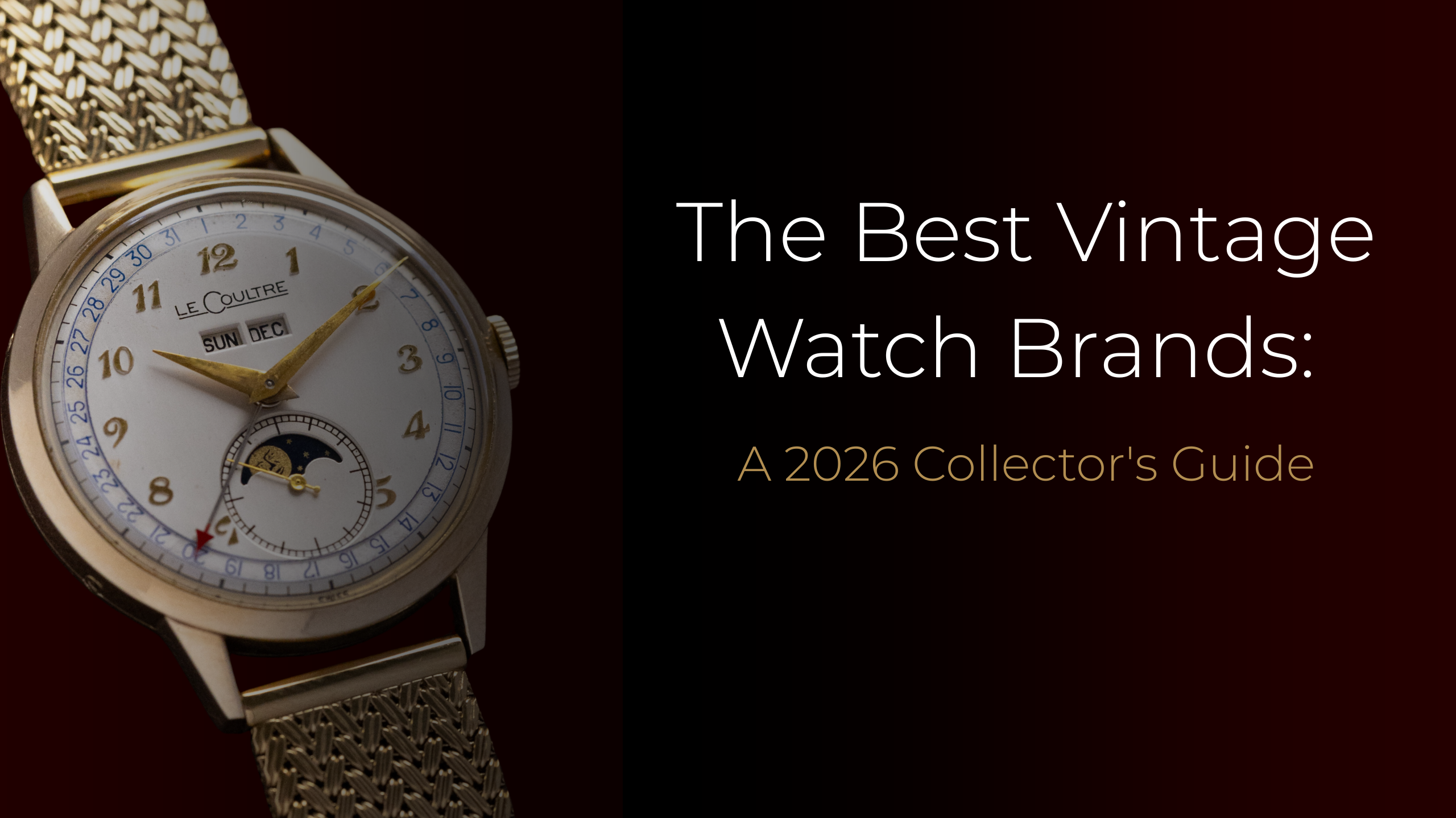
Let’s make it concrete. When you look at a vintage Omega Cosmic triple calendar dial, you’ll usually see:
-
Day window at 10–11 o’clock
-
Month window at 1–2 o’clock
-
Central date hand, often tipped with a crescent or arrow

-
Moonphase aperture at 6 o’clock
Each of these elements works together visually. The layout is intentional, designed to be readable at a glance without overwhelming the wearer. That’s part of the genius of mid-century Swiss watchmaking.
Triple Calendar vs. Perpetual Calendar
This is where many people get confused. A triple calendar does not automatically account for:
-
Months with fewer than 31 days
-
Leap years
That means manual correction is required at the end of shorter months. A perpetual calendar, by contrast, handles these adjustments mechanically.
However, this “limitation” is also a strength. Triple calendar movements are:
-
Thinner
-
More reliable over decades
-
Easier and cheaper to service
For a vintage watch from 1952, that matters—a lot.
Anatomy of a Triple Calendar Dial
Understanding the layout is the key to mastering how to read Triple Calendar watches confidently.
Day Display
The day is usually shown through a rectangular aperture. On vintage Omega models, the typography is clean and restrained. Some examples feature bilingual day wheels, often English and French.

The day advances once every 24 hours, typically around midnight.
Date and Month Indicators
The date is indicated by a central hand that points to a numbered track around the edge of the dial. This design choice keeps the dial symmetrical and easy to read.
The month appears in its own window near the top of the dial. Like the day, it advances incrementally and requires manual adjustment at the end of short months.
Moonphase Function
The moonphase is both poetic and practical. It shows the current phase of the moon as it appears in the night sky.
On the Omega Cosmic:
-
The moon disk rotates once every 29.5 days
-
A smiling or serene moon face is often depicted
It’s not just decoration—it’s a nod to traditional astronomy and timekeeping.
Step-by-Step: How to Read Triple Calendar Displays
Now we get to the heart of the matter: how to read Triple Calendar information in daily use.
Reading the Day
Look at the day window first. It tells you the current weekday in plain text. There’s no guesswork here—just read it directly.
Reading the Date
Next, follow the central date hand. It points to a number on the outer track, usually from 1 to 31. The crescent tip helps distinguish it from the hour and minute hands.
Reading the Month
The month window works just like the day window. Read the abbreviated month name (e.g., JAN, FEB, MAR).
Reading the Moonphase
Finally, glance at the moonphase aperture. If the moon is fully visible, it’s a full moon. If it’s partially covered, you’re seeing a waxing or waning phase.
Put together, this information gives you a complete snapshot of time—far beyond hours and minutes.
Setting and Caring for a Vintage Triple Calendar
Knowing how to read Triple Calendar displays is only half the story. Setting them correctly is just as important.
Correct Setting Order
For vintage watches, always:
-
Advance the time to 6:00 (to avoid damaging the calendar mechanism)
-
Set the day and month
-
Set the date
-
Adjust the moonphase
-
Finally, set the correct time
If you’re unsure, consult a professional watchmaker.
Common Mistakes to Avoid
-
Never set the calendar between 9 PM and 3 AM
-
Avoid forcing pushers
-
Don’t over-wind the crown
Proper care ensures these watches survive another generation.
Why Triple Calendar Watches Still Matter Today
Despite smartwatches and digital calendars, triple calendar watches remain deeply relevant.
Collector Value
Vintage Omega triple calendars are:
-
Increasing in value
-
Historically significant
-
Relatively rare compared to simple dress watches
Collectors love them because they offer complications without extreme fragility.
Daily Wear Appeal
They’re also wearable. Unlike ultra-complicated watches, triple calendars:
-
Are intuitive
-
Don’t feel intimidating
-
Add character to everyday outfits
That’s a rare combination.
For more on classic Swiss complications, see Omega’s official heritage archive:
https://www.omegawatches.com/en/planet-omega/heritage
FAQa
1. Is a triple calendar the same as a perpetual calendar?
No. A triple calendar requires manual adjustment at the end of short months.
2. How accurate is a moonphase complication?
Most vintage moonphases are accurate to one day every 2–3 years.
3. Can I wear a vintage triple calendar daily?
Yes, if it’s properly serviced and handled with care.
4. Why is the date shown with a central hand?
It improves legibility and keeps the dial balanced.
5. Are Omega Cosmic triple calendars rare?
Yes, especially in solid 18K gold cases.
6. Do I need special tools to set the calendar?
Some models use pushers that require a stylus, not a sharp object.
Conclusion
Learning how to read Triple Calendar watches opens the door to a deeper appreciation of Swiss horology. Using the 1952 Omega Cosmic Ref. 2471/2 as an example shows just how elegant, logical, and enduring these designs are.
They’re not just timekeepers. They’re mechanical storytellers—quietly marking days, months, and lunar cycles while reminding us that true craftsmanship never goes out of style.