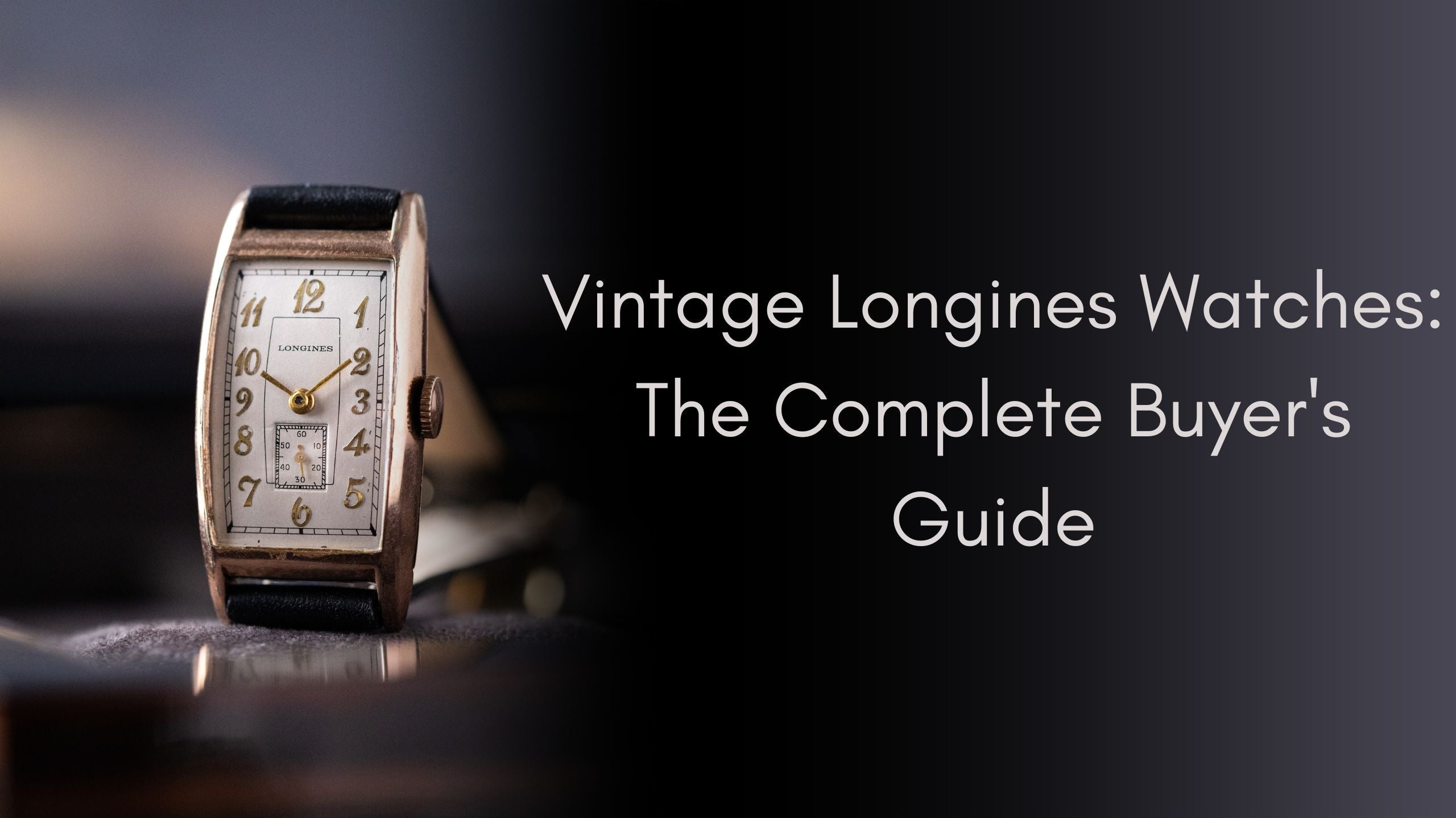

The word “vintage” is everywhere in the watch world. But what exactly qualifies a watch as vintage? Is it purely about age—or are design, craftsmanship, and historical context equally important?
In the world of horology, “vintage” is typically used to describe timepieces that are at least 20–30 years old. However, the most coveted vintage watches share more than age: they reflect the craftsmanship and cultural trends of their era, often featuring mechanical movements, distinct period styling, and unique details that are no longer produced today.
To understand what makes a watch vintage—and valuable—it helps to explore the defining characteristics of each watchmaking decade.
1940s – Wartime Functionality and Practical Design
The 1940s were dominated by World War II, and watchmaking became a matter of military necessity. Governments commissioned timepieces for troops, aviators, and naval officers. Watches from this period are utilitarian and built to endure harsh conditions.
Design and Features:
-
Matte black dials for legibility
-
Arabic numerals and luminous hands (often radium-coated)
-
Small steel or chrome-plated cases (30–34 mm)
-
Fixed lugs with canvas or leather straps
-
Engraved military casebacks
Notable Brands and Models:
-
Omega WWW “Dirty Dozen”

-
Longines 6B/159 (RAF-issued)
-
Hamilton U.S. military field watches
-
German GUB and Soviet Pobeda models
Collectors prize these watches for their historical authenticity and minimalist design language. Many are still wearable today with a rugged, understated charm.
1950s – The Golden Age of Dress Watches
In the postwar era, economic recovery led to a shift from utility to elegance. The 1950s ushered in a wave of refined dress watches—thin, elegant, and built for professionals. Mechanical movements remained the standard, but design took a step toward luxury.
Design and Features:
-
Polished stainless steel or gold-plated cases
-
Slim profiles with curved lugs
-
Clean dials with dauphine or leaf hands
-
Domed acrylic crystals
-
Discreet branding and applied markers
Notable Watches:
-
Omega Seamaster and Genève

-
Longines Flagship and Conquest
-
Tissot Visodate
-
Soviet Pobeda and Zvezda dress models
These watches are ideal for collectors looking for understated vintage style. Their sizes (34–36 mm) are making a comeback among those who value classic proportions.
1960s – Modernism, Precision, and Everyday Elegance
The 1960s were a decade of optimism, innovation, and exploration. These themes carried into watchmaking, with brands refining both the design and technical accuracy of their timepieces. Chronometers and automatic movements became more widely available, and watches started to reflect modernist aesthetics.
Design and Features:
-
Baton hands and applied indices
-
Refined sunburst dials
-
Introduction of day-date complications
-
Increased accuracy through higher-frequency movements
-
Improved waterproofing and case durability
Key Models:
-
Rolex Oyster Perpetual Datejust
-
Zenith Captain and Respirator
-
Seiko 5 automatic series
-
Raketa 24-hour and polar watches

Watches from the 1960s represent a perfect balance between vintage styling and practical wearability. Many are robust enough for daily use today.
1970s – The Quartz Disruption and Bold Aesthetics
The 1970s brought dramatic changes. The rise of quartz technology—led by Seiko—threatened Swiss mechanical watchmaking. To stand out, many brands responded with bold, unconventional designs. This decade is now considered the most creative and radical in vintage watch history.
Design and Features:
-
Chunky cushion, tonneau, and TV-case shapes
-
Vibrant dial colors (blue, green, orange, fumé)
-
Integrated bracelets and oversized crowns
-
Introduction of quartz and automatic chronograph movements
-
Increased use of mineral crystals and early sapphire
Notable Watches:
-
Seiko 6139 “Pogue” and 6138 “Panda” chronographs
-
Omega Constellation C-case and Dynamic

-
Poljot 3133 Soviet chronograph
-
Bulova Accutron (tuning fork movement)
These funky and often underappreciated designs are enjoying a resurgence. For collectors, the 1970s offer a wide variety of daring styles with serious horological interest.
1980s–1990s – Neo-Vintage Innovation and the Comeback of Mechanics
During this transitional period, mechanical watches made a quiet comeback while quartz remained dominant. Brands experimented with new materials and redefined sport-luxury aesthetics. Today, watches from this era are classified as neo-vintage—modern enough to be durable, yet old enough to carry nostalgic appeal.
Design and Features:
-
Slim steel and two-tone designs
-
Increased case sizes (36–40 mm)
-
Reliable quartz and ETA-based automatic movements
-
Early use of sapphire crystals
-
Refined dials with precision printing
Collectible Models:
-
TAG Heuer Formula 1 and 1000 Series
-
Vostok Amphibia and Komandirskie
-
Rolex Explorer II 16550 (transitional model)
-
Omega Seamaster “Pre-Bond” references
Neo-vintage watches are gaining traction among collectors for their affordability, practicality, and unique blend of old-school aesthetics with modern usability.
Final Thoughts: Why Eras Matter in Vintage Watch Collecting
Understanding the distinct characteristics of each watchmaking era allows collectors to develop deeper appreciation, avoid common pitfalls, and make informed buying decisions. While age is one factor, a watch’s design language, movement, material, and historical context are what truly define its vintage identity.
Each era offers something unique. The 1940s speak to rugged functionality, the 1950s to refined simplicity, the 1960s to technical precision, the 1970s to bold experimentation, and the 1980s–1990s to transitional innovation.
Today’s vintage market is broader than ever, welcoming new collectors who are seeking character, storytelling, and the tactile experience of mechanical watchmaking.
Q1. What makes a watch vintage?
A1. A watch is generally considered vintage if it is at least 20–30 years old and reflects the design, materials, and craftsmanship of its original era.
Q2. How old does a watch have to be to be called vintage?
A2. Most collectors consider watches made before the mid-1990s to be vintage, though desirability depends on era, originality, and condition.
Q3. Are all old watches considered vintage?
A3. No. Age alone isn’t enough—vintage watches typically feature period-correct design, original components, and historical relevance.
Q4. What defines a 1940s vintage watch?
A4. 1940s watches are defined by wartime utility, small steel cases, matte dials, radium lume, and military-issued designs.
Q5. Why are WWII-era watches so collectible?
A5. They offer direct historical significance, rugged functionality, and minimalist design shaped by military requirements.
Q6. What makes 1950s watches special?
A6. The 1950s are known for elegant dress watches with slim cases, refined dials, and high-quality mechanical movements.
Q7. Are 1950s watches still wearable today?
A7. Yes. Many 1950s watches are reliable daily wearers if properly serviced and kept away from water.
Q8. What characterizes 1960s vintage watches?
A8. 1960s watches feature modernist design, improved accuracy, automatic movements, and better water resistance.
Q9. Why are 1960s watches popular with collectors?
A9. They balance classic aesthetics with durability, making them ideal for everyday vintage wear.
Q10. What happened to watch design in the 1970s?
A10. The quartz crisis triggered bold experimentation, resulting in large cases, colorful dials, and unconventional shapes.
Q11. Are 1970s watches considered vintage?
A11. Yes. 1970s watches are fully vintage and increasingly sought after for their daring design and technical innovation.
Q12. What is the quartz crisis in watchmaking?
A12. It was a period when quartz technology disrupted traditional mechanical watchmaking, especially in Switzerland.
Q13. What does neo-vintage mean in watches?
A13. Neo-vintage refers to watches from the 1980s–1990s that combine modern durability with vintage character.
Q14. Are 1990s watches considered vintage?
A14. Some late 1990s watches are now entering vintage status, especially mechanical or transitional models.
Q15. Why are neo-vintage watches becoming popular?
A15. They offer better materials, sapphire crystals, and reliable movements while retaining nostalgic design.
Q16. Do case size standards affect whether a watch is vintage?
A16. Yes. Vintage watches typically range from 30–36mm, reflecting historical wrist proportions and movement constraints.
Q17. Is patina important in defining a vintage watch?
A17. Yes. Natural aging of dials, lume, and cases often confirms originality and enhances collector value.
Q18. Are vintage watches a good investment?
A18. Some are, especially rare or historically significant models, but most collectors buy vintage for enjoyment rather than speculation.
Q19. What should collectors look for when buying a vintage watch?
A19. Original dial, correct movement, period-correct parts, honest wear, and clear provenance.
Q20. Why does understanding watch eras matter?
A20. Each era reflects unique design philosophies and technologies, helping collectors choose watches that match their taste and values.