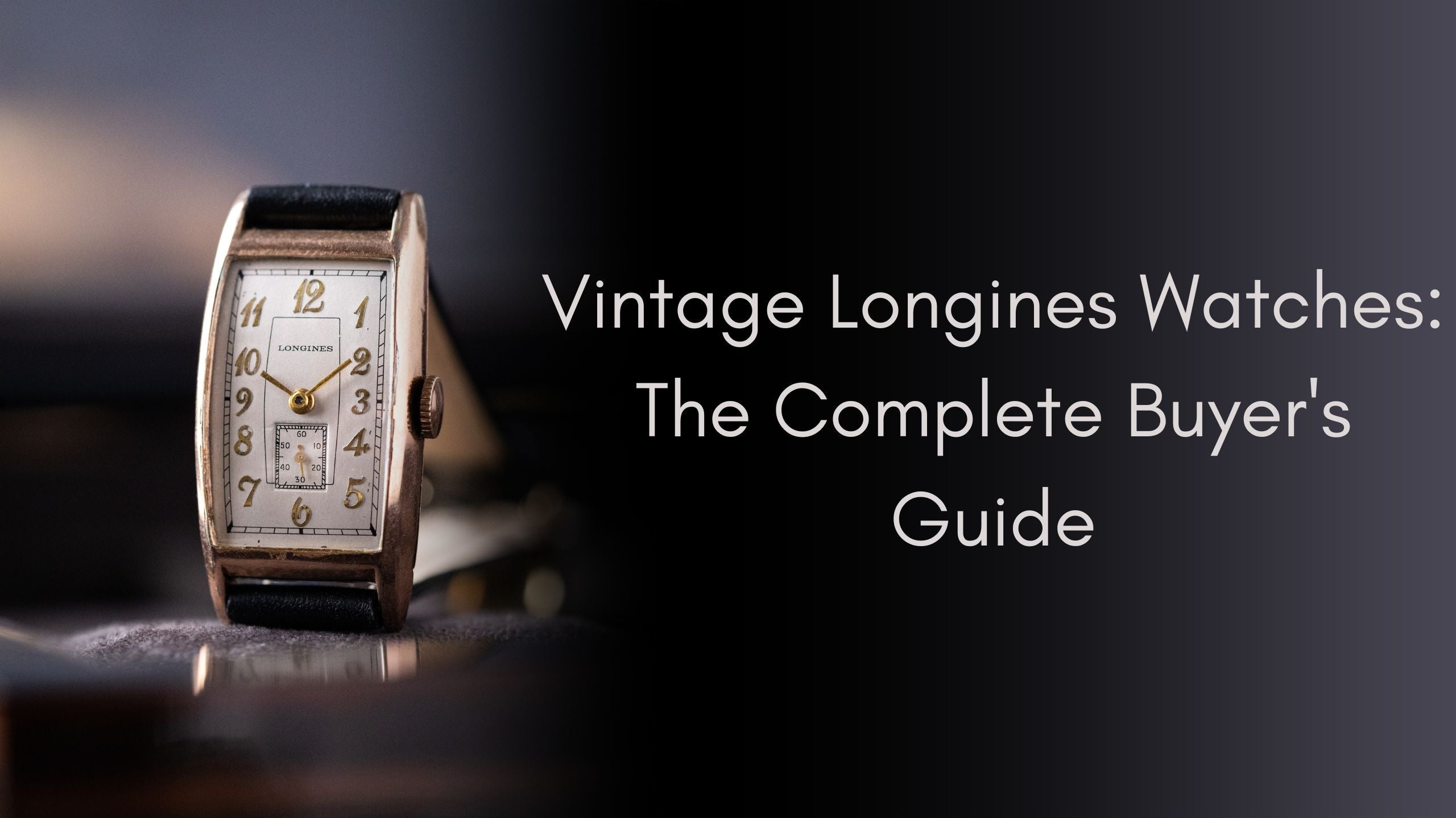

Vintage watch servicing, sometimes called overhaul or revision, is a detailed mechanical restoration process performed on timepieces that are often decades — sometimes nearly a century — old. Understanding it is the first duty of any serious collector.
These watches rely entirely on mechanical systems composed of delicate gears, springs, balance wheels, and jewel bearings. Over time, oils dry, friction increases, and microscopic wear begins to spread across the movement. A proper vintage watch service is not simply "cleaning the watch" — it is a full disassembly and reconditioning process. Whether you own a vintage Omega Seamaster, a 1970s Rolex Datejust, a Universal Genève, or an antique pocket watch, the process is similar — but the sensitivity, difficulty, and risks vary by brand and age.
What Is Vintage Watch Servicing?
A complete vintage watch service includes the following:
- Complete breakdown of the movement
- Cleaning every component using specialized watch-cleaning formulas
- Identifying worn or damaged parts (many now obsolete)
- Repairing or replacing components with original-era parts
- Lubrication with several types of modern high-grade oils
- Reassembly in exact manufacturer order
- Regulation, timing, amplitude, and beat testing
- Multi-position accuracy verification
- Gentle case cleaning
- Final testing over 24–48 hours
Why Vintage Watch Servicing Is Different from Modern Servicing
Vintage watches require a fundamentally different approach from modern pieces. Parts are discontinued — Omega 30T2, Longines 12.68Z, Rolex 1575 — and a specialist must source donor movements, purchase NOS parts, or fabricate components manually. Materials are aged and fragile. Many watches from 1930–1960 used radium, a radioactive substance requiring extreme caution. Vintage dial surfaces are so delicate that even wiping them can remove original print. Early movements were hand-finished; no two are exactly alike.
Because of these factors, general jewelers or basic repair shops cannot handle antique watch repair safely. Only a trained vintage watch specialist should service such pieces.

Why Servicing Vintage Watches Matters More Than You Think
People often assume that if a vintage watch is ticking, it must be healthy. But like a car running with no oil, a watch may still function while suffering catastrophic internal wear.
A mechanical watch runs 28,800 vibrations per hour — or 18,000 for older calibers. That's hundreds of thousands of micro-impacts every day. Oils evaporate. Friction rises. Metal begins to grind. — The case for regular servicing
Hidden Damage Inside a Non-Serviced Watch
Inside a movement that hasn't been professionally serviced for five, ten, or even twenty years, the following issues are common:
- Dried or evaporated oil — causes metal-to-metal friction on gear pivots, escape wheel teeth, pallet stones, and rotor bearings
- Metallic dust contamination — microscopic metal shavings scratch bridges, embed in pivot holes, and disrupt the escapement
- Worn or ovalized pivot holes — jewel holes become misshapen, changing gear alignment and causing unstable timekeeping
- Rust and oxidation — even minimal moisture leads to rust on screws, corrosion under bridges, and pitting on steel parts
- Compromised mainspring — after decades, mainsprings lose tension, crack, slip, or unwind unevenly
- Loose or cracked jewels — shock or age causes jewels to dislodge, dramatically changing friction points
- Misaligned escapement — even slight misalignment leads to inconsistent tick rate, low amplitude, and sudden stopping
- Worn rotor axles — Omega calibers 550, 552, 565 are famous for rotor wear that can scratch the movement and case back
Why Vintage Movements Are More Sensitive
Modern watches use advanced alloys, shock protection systems, synthetic oils, and CNC-machined components. Vintage watches do not. Original lubricants were natural oils that dry faster than modern synthetics. Pre-1960 watches may lack shock systems entirely. Softer steel and brass alloys wear faster under friction. Because of these factors, antique and vintage watch repair must be performed with patience, precision, and respect for original materials.

How Often Should You Service Vintage Watches?
Servicing intervals depend on the watch's age, brand, design, lubrication type, and wear frequency. Vintage watches were designed at a time when regular maintenance was expected — they are not "set and forget" devices.
- Omega manual-wind — every 4–5 years
- Omega automatic — every 4 years
- Omega chronograph (861, 321) — every 4–5 years
- Longines — every 4–6 years depending on usage
- Rolex — every 5–7 years depending on use
- Universal Genève — every 4 years
- Zenith El Primero — every 4–5 years
- Tissot / Doxa / Enicar — every 4–5 years
- Vintage Cartier (mechanical) — every 4–5 years
- Antique pocket watches — every 3–4 years
Omega
Vintage Omega watches — the 30T2, 550-series automatics (552, 561, 565), 601/603, and 861 Speedmaster movements — are beautifully engineered but require consistent care. Rotors wear heavily; when left unserviced, the rotor scrapes the movement or case back. Omega's escapements rely on precise lubrication — when oils dry, performance drops sharply. Many vintage Omega components are now expensive or scarce, making timely servicing even more critical.
Longines
Longines is known for high-precision calibers with fine tolerances — from early pocket watches to 12.68Z dress watches and 990 ultra-thin movements. Fine tolerances mean small issues become big problems quickly. Longines stems are more prone to wear if lubrication dries, and pivot holes are at risk of ovalization. With proper antique watch repair, these movements can last indefinitely.
Rolex
Rolex movements like 1210, 1225, 1520, 1570, 3035, 3135 are extremely durable — more so than most vintage watches — but this does not mean they can run without maintenance. Even "Oyster" cases lose water resistance as tubes wear, crowns age, and crystals deform. Vintage Rolex service cost is significantly lower at independent specialists compared to the Rolex Service Center, especially for collectors who want originality preserved.
Other Swiss Makers
Movements like 215, 218, 289 are delicate and expensive to repair. Service every 4 years.
El Primero chronographs need extremely clean lubrication. Service every 4–5 years.
Affordable but sensitive to dried oils. Service every 4–5 years.
Vintage Cartier repair frequency depends on movement supplier (ETA, Piaget, LeCoultre). Typically every 4–5 years.
Due to high torque and old oils, service every 3–4 years without exception.
Full Step-by-Step Breakdown of a Professional Vintage Watch Service
A proper vintage watch servicing operation follows an extremely strict order to ensure that the watch is restored correctly without damaging originality.
Step 1 – Initial Functional Assessment
Before opening the watch, a vintage watch specialist evaluates winding smoothness, rotor noise, hand-setting feel, date jump sharpness, power reserve behavior, and accuracy on a timegrapher in "as received" condition. This helps identify worn barrels, escapement problems, and early signs of damage before disassembly begins.
Step 2 – External Case & Dial Examination
The goal is to assess cosmetic and structural condition without disturbing originality. The specialist inspects dial patina, hand alignment, case hallmarks, crystal type, and bezel condition. Vintage watch servicing must avoid rubbing the dial, polishing the case, touching lume flakes, or disturbing radium particles. This step is crucial for preserving value.
Step 3 – Opening the Case & Inspecting the Movement
A vintage specialist uses the correct tools — Jaxa wrenches, Rolex 29.5/28.5 openers, Omega case back dies. Inside, the specialist examines oil condition, pivot wear, signs of previous repair attempts, corrosion under bridges, loose jewels, and early-stage rust. This stage determines what parts may need replacement or donor sourcing.

Step 4 – Complete Disassembly of the Movement
The watchmaker removes hands, dial, calendar works, train wheels, escapement, pallet fork, balance assembly, barrel and mainspring, keyless works, bridges, plates, screws, springs, and the automatic winding module if present. Each part is placed in compartment trays to prevent loss — tiny screws are priceless in antique watch repair.

Step 5 – Ultrasonic Cleaning (Three-Stage Deep Cleaning)
Parts are cleaned in three stages: solvent cleaning to remove oils and carbonized lubricants; two rinse cycles to ensure no chemical residue remains; and hot air drying to prevent oxidation. Crystal, dial, and case are never placed in the machine — only metal components.

Step 6 – Mainspring Service or Replacement
The original mainspring is reused only if the watch is historically valuable and the spring is in good condition. A new mainspring improves amplitude, power reserve, accuracy, and reliability. Automatic watches often require slip-spring lubrication; antique pocket watch repair often requires hand-winding mainspring adjustments.
Step 7 – Gear Train Examination
The watchmaker inspects gear tooth shape and wear, pivot thickness and straightness, jewel hole condition, end-shake and side-shake, and freedom of movement under no load. Any friction indicates deeper damage. Vintage chronograph repair requires extra care because the gear train interacts with the chronograph module.
Step 8 – Escapement Adjustment
The escapement controls the watch's precision. The specialist checks pallet fork integrity, pallet stones position, escape wheel teeth condition, lock and drop, impulse jewel alignment, and beat symmetry. Improper escapement tuning is the biggest cause of poor performance in vintage watches.
Step 9 – Lubrication with High-Precision Oils
Modern servicing uses 6–10 types of oils and greases. Vintage watch servicing requires Moebius 9010 for fast-moving pivots, Moebius 9415 for escapements, Moebius HP1300 or D5 for train wheels, grease for keyless works, and specific lubrication for automatic modules. Over-oiling or under-oiling destroys watches — this is where true antique watch specialists stand out.
Step 10 – Reassembly in Correct Order
Every component must be installed in a precise order. Even a single misaligned wheel or incorrectly tightened screw can stop the watch entirely. Rolex requires correct placement of the auto-winding bridge and calendar jumper tension. Omega demands careful rotor axle alignment in 5xx and 6xx calibers. Longines requires ultra-sensitive screw torque on fragile thin bridges. Reassembly is where real craftsmanship becomes visible.
Steps 11–13 – Regulation, Amplitude & Beat Error
A timegrapher displays rate, amplitude, beat error, and signal clarity. A well-serviced vintage watch should achieve a rate of ±60–90 seconds/day, amplitude of 230–270° (manual wind) or 210–260° (automatic), and beat error of 0.0–1.0 ms. Beat error — the asymmetry between tick and tock — is corrected by rotating the balance collet or repositioning the impulse jewel.

Steps 14–15 – Positional Testing & Water Resistance
Vintage watches are tested in six positions — dial up, dial down, crown up, crown down, 12 o'clock up, 9 o'clock up — to simulate real-world wearing conditions. Water resistance testing is conducted conservatively: dry vacuum test and light pressure only, never full immersion. Antique watches from the 1910s–1940s should never be water tested.
Steps 16–19 – Case Cleaning, Final Assembly & Documentation
The case is cleaned without polishing. The movement is returned to its case, the dial aligned, hands pressed with calibrated tools, and the case closed with proper torque. The watch is tested for 48 hours in varying positions before return to the owner. Professional workshops provide written documentation, timing printouts, amplitude measurements, a list of replaced parts, and a warranty card of 3–12 months.

Essential Things to Know Before Servicing a Vintage Watch
Parts Availability & Risks
Many original components are discontinued, making repairs more complex and expensive. Rare components include balance staffs, Omega rotors, Rolex reverser wheels, vintage chronograph wheels, calendar discs, jewels, and pocket watch escapement components. When a part cannot be found, the watchmaker purchases a donor movement — often sacrificing one vintage watch to save another. Non-original parts can ruin authenticity, reduce value, cause mechanical incompatibility, and lead to long-term failure.
Value Preservation
Proper vintage watch servicing not only protects your watch — it increases value. A documented service improves resale desirability, mechanical lifespan, timekeeping performance, and buyer trust. Always keep service receipts, timing sheets, parts lists, and watchmaker details. This documentation proves authenticity and care — especially important for vintage Rolex and Omega watches.
Servicing Costs Explained: Omega, Longines, Rolex & Others
Prices vary depending on the watch brand, age, complexity, and whether the service is performed by an independent specialist or an official service center. Independent specialists generally preserve originality, avoid unnecessary part replacement, do not polish unless requested, and prioritize maintaining vintage aesthetics.
| Brand | Independent Specialist | Official Service Center |
|---|---|---|
| Vintage Omega | $180–350 | $650–900+ |
| Vintage Longines | $160–300 | $500–750+ |
| Vintage Rolex | $250–450 | $900–1,200+ |
| Vintage Cartier | $200–350 | $700–1,000+ |
| Vintage Chronograph | $350–700+ | $1,000–1,800+ |
| Vintage Pocket Watches | $150–350 | n/a (no official service) |
| Universal Genève | $200–350 | n/a |
| Tissot / Doxa | $120–250 | $350–500 |
How to Choose the Right Workshop for Vintage Watches
Choosing the right watchmaker can be the difference between preserving value and destroying it. When selecting a vintage watch repair specialist, look for experience with your specific brand, professional equipment, access to spare parts and donor movements, transparency, and a philosophy of preservation over restoration.
- No timegrapher on premises
- Offers to "polish the case" without being asked
- Cannot identify the movement caliber by sight
- Will not return old parts after service
- No written estimate or service documentation
- Cannot source NOS or period-correct replacement parts
Maintenance & Care Between Servicing
Proper care dramatically extends the lifespan of vintage watches. Even with a full professional overhaul, poor daily habits can damage the movement, dial, case, and crystal.
Daily Habits
Always wind slowly and steadily — vintage crowns, stems, and keyless works are not as strong as modern ones. Stop winding as soon as resistance increases; do not snap the crown. Magnetization is one of the most common issues today: avoid laptop speakers, magnetic phone cases, airport scanners, and magnetic charging cables. Vintage watches are NOT water-resistant — even if originally rated waterproof — so avoid washing hands, saunas, rain, and bathroom humidity. Moisture destroys vintage dials and causes rust in hours, not days.
Long-Term Storage
Humidity is the biggest enemy. Store watches in a dry cabinet, a box with silica gel, or a dedicated watch safe with humidity control. Never store in basements or bathrooms. Run the watch every 1–2 months to prevent oils from coagulating. Avoid direct sunlight — UV exposure damages dials and fades lume.
Wearing Your Watch Safely
Even small shocks can break balance staffs, dislodge jewels, bend wheels, and damage pallet fork pivots — avoid gym workouts, running, cycling, and DIY home projects. Be cautious of rapid temperature changes, which can cause condensation inside the case. Do not activate chronographs underwater or with force: older chronograph clutches are extremely delicate.
Whether you're a seasoned collector or a new enthusiast, choosing the right watchmaker and following proper maintenance practices ensures that your vintage timepieces remain treasures for generations. — A guiding principle for every collector
Collector's Questions
Frequently Asked Questions