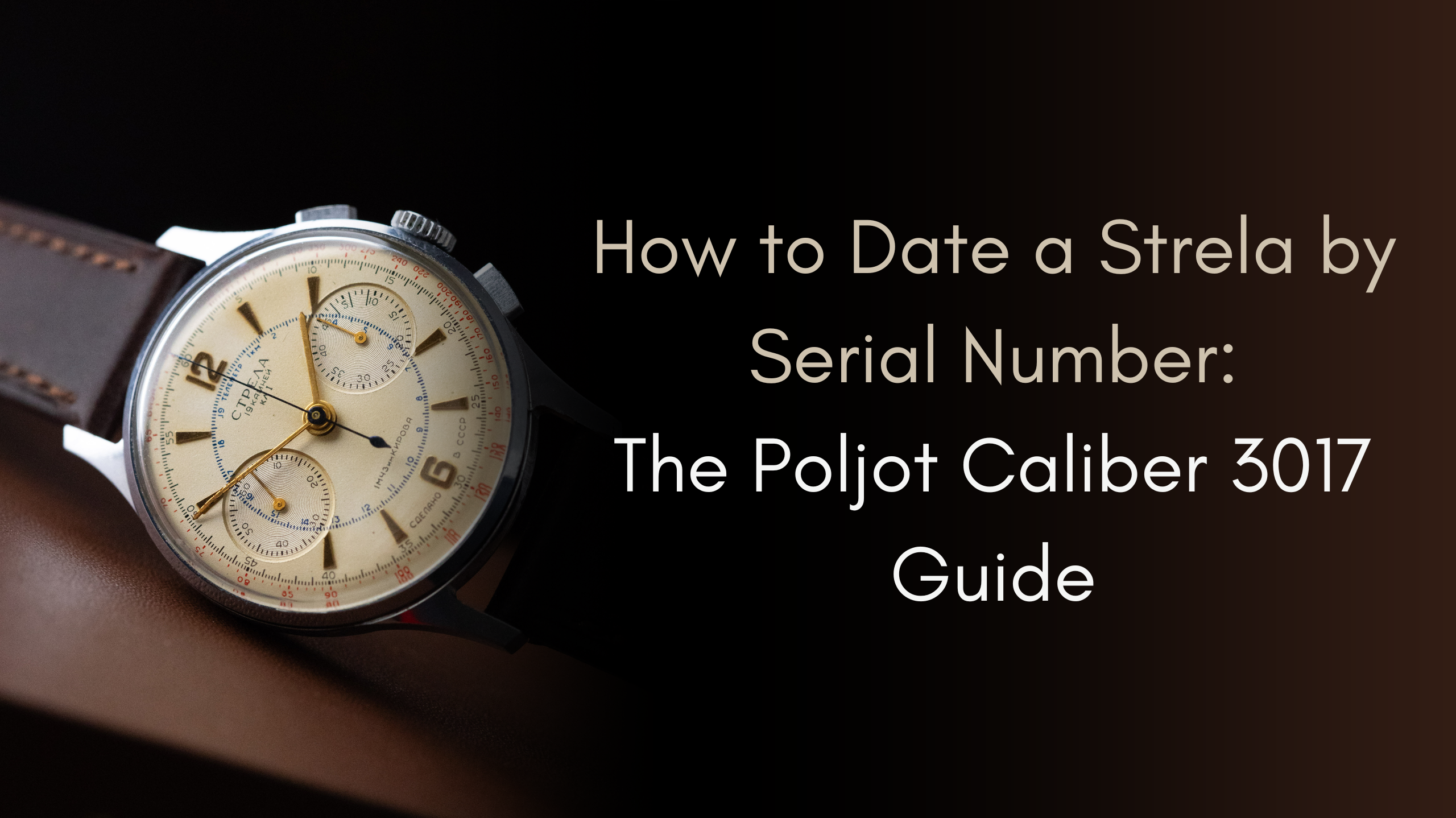

In the world of Swiss watches, small details matter. Hour markers — the shapes or symbols that indicate the hours — define a watch's character as much as its movement. From vintage pieces treasured by collectors to modern models inspired by the past, these tiny elements are both practical and deeply decorative.
Over many decades, certain marker styles became instantly recognisable. Famous brands such as Omega, Longines, Rolex, Patek Philippe, and Audemars Piguet each developed marker designs that reflect their identity. In the 1950s, dial maker Stern Frères published its first catalogue of applied hour markers for clients, followed by a second edition around 1965. We use these catalogues as the basis for our classification today, focusing on two main categories: sign symbols and indices.

Sign Symbols
Sign symbols are distinct from indices and deserve their own category. They sit raised above the dial's surface and include more than just numbers — some feature decorative or symbolic elements such as zodiac signs or unique motifs, adding personality and visual interest to the watch face.

Roman Numerals
Roman numerals impart a sense of classical elegance. Often seen on dress watches, they evoke the look of vintage clocks and pocket watches. The Cartier Tank, with its black Roman numerals on a white dial, stands as an icon of timeless style. Rolex often outfits its Datejust models with gold Roman numerals that emphasise tradition and luxury. Generally reserved for formal designs, Roman numerals give a watch a dignified, old-world character that appeals to those who appreciate classical European aesthetics.

Arabic Numerals
Arabic numerals offer immediate legibility and are common on military, aviation, and sports watches. Many mid-20th-century field and pilot watches featured full Arabic dials for quick time-reading under pressure. A classic example is the Rolex Explorer, which famously uses bold Arabic 3-6-9 markers for high readability. In any era, Arabic numerals lend a watch an air of functional clarity and heritage.

Breguet Numerals
Breguet numerals are a special form of Arabic numerals with a flowing, cursive flair. Developed by famed watchmaker Abraham-Louis Breguet in the late 18th century, they are characterised by elegant curves and serifed details that resemble fine calligraphy. They often appear on high-end dress watches to signal vintage refinement — not only on Breguet's own pieces but also on models from Patek Philippe and others. A Calatrava with Breguet numerals evokes early 19th-century style while remaining thoroughly Swiss in craftsmanship. Their presence instantly adds a touch of neo-classical luxury to any watch face.

Indices
Originally, the term "index" referred to a simple, flat, stick-shaped marker — often pointed at one end — carefully applied to the dial to mark each hour. Over time, the meaning expanded and now encompasses almost any type of hour marker that replaces traditional numerals. The main types are:
- Baton (non-pointed index)
- Single-pointed index (Dagger)
- Double-pointed index
- Triangle or Arrow
- Lozenge
- Square
- Cabochon (Dots and Jewels)

Baton Markers (Non-Pointed)
Baton indices are flat, rectangular bar markers with blunt ends — no points. They range from very slim stick markers to wide, blocky bars. By definition, batons have a straight profile with parallel sides and do not taper to a point.
Baton markers rose to prominence in the 1950s–1970s. In the 1950s they began appearing on dress watches as the archetypal "stick dial" look — understated mid-century elegance. By the 1960s, thicker luminous batons became a hallmark of Space Age tool watches, from dive watches to racing chronographs. Their bold, modern look and excellent legibility suited the era's emphasis on function. Even today, baton indices remain the most common marker style, valued for clarity and versatility.

Single-Pointed Markers (Dagger)
Slim, sharp, and pointed, dagger markers rose to prominence in the 1950s as hallmarks of mid-century watch design. A dagger hour marker is a thin triangular index that tapers to a point toward the dial centre. Often faceted to catch the light, these markers add a subtle sparkle as the watch moves — a touch of modernist minimalism that fit perfectly with post-war taste for clean lines and functional elegance.
Single-pointed indices often appear on sought-after vintage models — some early Rolex Oyster Perpetuals and Omega Seamaster dress references carry dagger markers. Collectors value intact original dagger indices, especially those with intricate facets.

Double-Pointed Markers (Elongated Diamonds)
Double-pointed indices have both ends tapered to points, forming an elongated diamond or lozenge shape. Unlike single-pointed daggers, these markers are symmetrical — coming to a tip on both the inner and outer ends. They often look like thin "hourglass" shapes or long lozenges set radially on the dial, adding a refined, decorative symmetry.

Triangle or Arrow Markers
As the name implies, an arrow marker is shaped like an arrowhead or triangle aimed at the dial centre. This bold design gained traction in the 1950s. Arrow markers can appear at each hour or just at the cardinal positions; either way, their wider base and pointed tip make them stand out distinctly. They were often faceted or painted with lume, serving as both a stylistic flourish and a functional aid for orientation.
One of the most famous uses of arrow markers was on the late-1950s Omega Constellation models with "pie pan" dials — faceted arrowhead markers all around, creating a dynamic, sparkling look. Longines also used arrow markers on some of its dress watches, reinforcing the trend across the industry.

Lozenge Markers (Diamond, Rhombus, Deltoid)
Lozenge indices are essentially diamond or rhombus shapes used as hour markers — a wider diamond with more equal proportions than the elongated double-pointed indices. A lozenge marker has four sides of equal or near-equal length, creating a tidy diamond figure on the dial. All four corners may be pointed, giving it a "four-point star" look when viewed head-on.
These markers serve as a midpoint between geometric shape and pointer. They are highly decorative, often used at special positions (3, 6, 9, 12 o'clock) to add emphasis. When faceted, their four sloping sides catch light beautifully, giving a jewel-like sparkle.

Square Markers
Squares are simple geometric shapes that serve either functional or decorative roles. Small squares can be filled with lume — common in dive watches — providing a larger lumed area than a dot of the same width. In other contexts, squares offer a bold, modernist look: a departure from traditional round dots or elongated bars. When used systematically, they create a very distinctive, instrument-like appearance on the dial.
The first notable peak of square markers was around 1950, correlated with late Art Deco influence in watch design. Late 1940s and early 1950s dress watches sometimes featured square markers — either alone or alternating with other shapes — as a nod to the geometry of Art Deco styling.

Cabochon Markers (Dots and Jewels)
A cabochon index refers to a small, round and domed marker — essentially the "dot" type hour marker. The term cabochon in jewellery means a smooth, domed gem; in dial terms it often indicates a round appliqué that is polished and convex. These markers can be solid metal hemispheres or actual jewels. Flat or painted dot markers also fall into this category as the simplest geometric option.
Collectors often differentiate between applied cabochon markers and painted dots. Vintage dress watches with tiny gold cabochon indices — often seen on 1950s Piaget or Jaeger-LeCoultre cocktail watches — are valued for their craftsmanship. Sports watch collectors covet early Rolex Submariners where white silvered applied dots have aged to a rich patina. Some watches even used gemstone cabochons (sapphires, rubies) as hour markers — blurring the line between functional index and ornament.

No Markers (Blank Dials)
Opting for no markers at all yields a clean, uninterrupted dial — a bold statement of minimalism. While it sacrifices some at-a-glance legibility, a marker-less dial showcases the purity of a watch's design without distraction. By the late 1970s and 1980s, some avant-garde watchmakers embraced this ultra-minimalist concept. The Cartier Must de Cartier Tank, for example, offered a solid dial with only a pair of hands and a discreet logo, relying on the case's form for orientation. Certain Omega De Ville pieces of that era featured completely blank dials — watches that prioritised aesthetic boldness over precise time-telling.

Conclusion
Hour markers may be small details, but they encapsulate decades of design evolution in Swiss made watches. Each style rose from a certain era's needs and tastes, and its legacy lives on in modern timepieces. That is why so many contemporary models echo vintage designs — brands know enthusiasts cherish these historical touches.
Whether you favour the functional clarity of Arabic numerals, the classical air of Roman numerals, or the lavish sparkle of diamond indices, noticing these details enriches the experience of owning a fine watch. So when you consider your next purchase — be it an Omega, a Rolex, a Patek Philippe or any other marquee name — take a moment to admire the hour markers. These unsung elements connect your watch to a rich tradition of craftsmanship and style, marking the passage of time in more ways than one.
Your Questions Answered
Frequently Asked Questions